



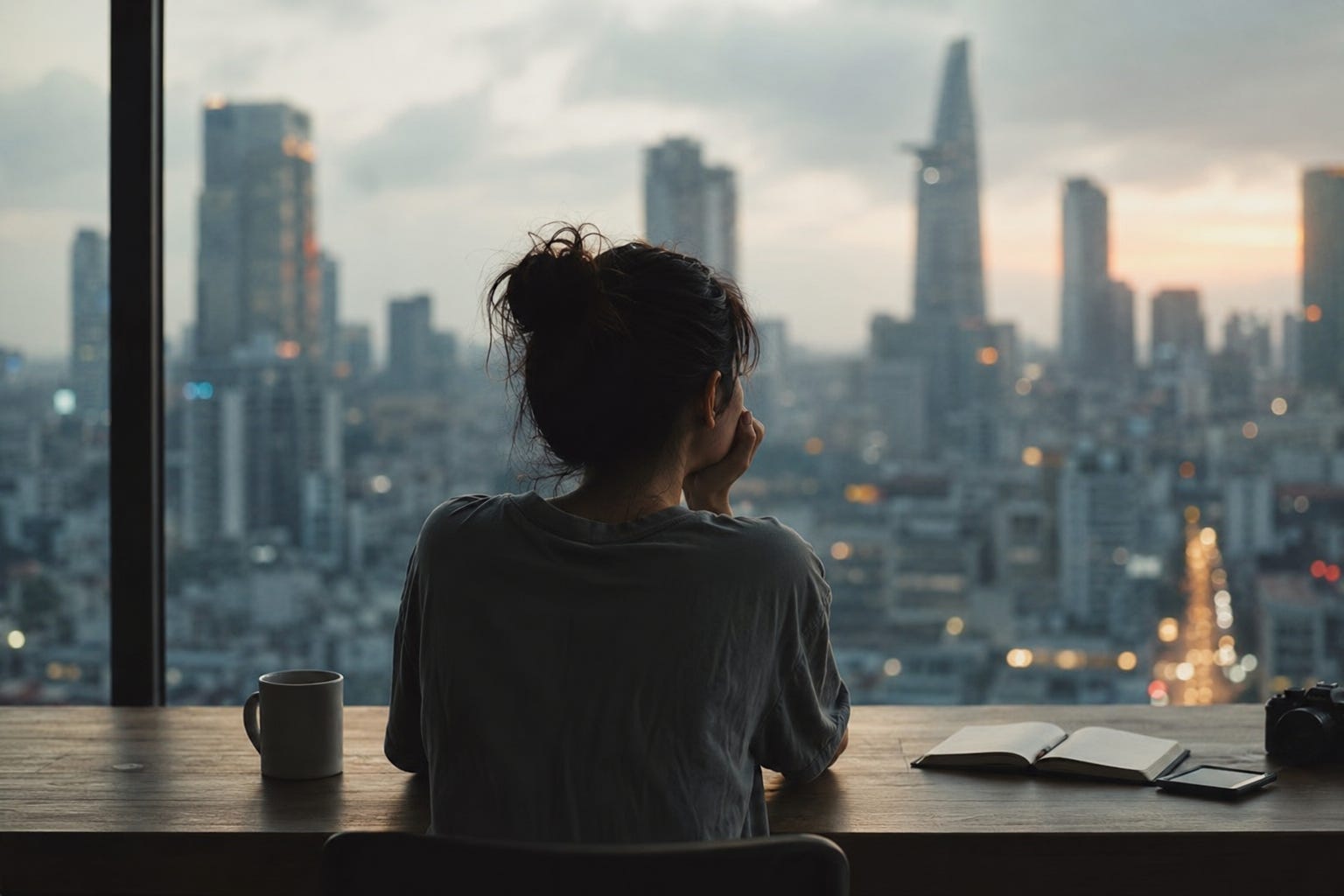
Last week, I talked about the crazy exhaustion that comes from feeling like you’re always misunderstood and trying to craft the perfect public image. It’s a real struggle, right? Today, let’s delve into something closely tied to that.
It’s all about the huge pressure so many of us feel to turn every moment and experience into something shareable. It can really weigh us down, making it seem like our lives are always being put on display, pushing us to capture, create, and share everything we do.
Living Through the Lens of Perception
We’re living in a world where it feels like everything we do is based on one main question:
How will this look to others?
More specifically:
How will this come across online?
This mindset goes way beyond just influencers; it’s everywhere in our culture.
People are always sharing bits of their lives:
Thoughts
Meals
Emotions
Breakdowns
Relationships
Transformations
Opinions
Daily routines
Now, sharing isn’t a bad thing. We’ve always wanted to tell stories, find meaning, and connect with others.
But there’s a big difference between truly expressing yourself and putting everything out there for public viewing right away.
It seems like more and more people are living their lives in the spotlight instead of enjoying them in private.
The Rise of Self-Narration
There’s a lot of pressure these days to share our lives as they’re happening, to frame our experiences while they’re still fresh, and to make sense of things right away. But I really think we lose something important in that rush.
Some moments need a bit of time and space before we can really get what they mean. Some feelings need us to just sit with them before we can find the right words. And there are parts of life that are just better left unshared to feel genuine.
Yet it feels like we’re getting increasingly uncomfortable with the idea of living without an audience. It’s like we assume that if we don’t share something, it matters less or isn’t really valid. I think this change messes with our minds.
Once you start living with the idea of an audience—even if you don’t mean to—you stop experiencing things just for yourself. You start thinking more about how everything will come across: How’s this going to sound? How’s it going to look? How will people see it?
In the end, that can make life feel like a bit of a performance. It’s not necessarily fake, but it’s definitely shaped and edited on the go.
When Vulnerability Becomes a Performance
This situation gets really tricky in emotional spaces. Vulnerability has essentially become content people share online.
Folks are processing their feelings publicly, breaking down in front of others, healing in the spotlight, and reflecting on their experiences for everyone to see.
I’m not necessarily knocking this behavior. Sometimes being open can really help others feel less alone. It can foster a sense of community and spark important conversations.
But always sharing personal stuff can blur the lines between actually processing emotions and just putting on a show.
Real emotional growth is usually slow, messy, and hard to put into words.
On the flip side, online culture loves speed: quick thoughts, instant takeaways, and fast emotional framing. This puts a lot of pressure on people to narrate their experiences before they’ve really sunk in.
Sometimes, people are still dealing with their feelings while also trying to shape those experiences into a story. This can make them feel kind of disconnected from what they’re actually going through. Instead of fully experiencing it, part of their mind is already standing outside, turning it into a narrative.
The Exhaustion of Constant Self-Awareness
One thing we don’t talk about much is emotional exhaustion. People weren’t really meant to constantly keep an eye on themselves. When you’re always aware of how you come across, there’s hardly any mental downtime.
You’re always on the lookout, evaluating everything, and thinking about how others might react. I think this is why a lot of folks feel oddly disconnected, even though they’re sharing more than ever.
Just because you can be seen doesn’t mean you’re truly known. Being visible isn’t the same as having real intimacy, and capturing your life on social media isn’t the same as actually living it.
The Value of Privacy
Modern culture often mixes up privacy with secrecy, but I think that’s not quite right. Privacy is more about having your own space. It’s the chance to feel something before you label it.
The ability to change your mind before you share it with everyone, and the freedom to just be without someone else trying to interpret you. I feel like a lot of people have lost touch with the idea of having experiences that are just for themselves.
It’s not because they’re shallow or craving attention. It’s just that being constantly visible has become the norm. When something feels normal, we often stop questioning it. Maybe it’s time to start questioning it again.
What Happens When Everything Is Public?
What happens to who we are when we share every moment of our lives online? How does our emotional truth change when being self-aware feels more like putting on a show? What’s the impact on our connections when people focus more on branding themselves instead of just being real?
These questions go beyond just influencers. Social media has trained us all to think about an audience. We start to predict reactions, imagine what people will say, and shape our lives around how we present ourselves.
This makes it tough to tell what we actually feel versus what just seems emotionally appealing. Storytelling has the ability to change how we experience things. Once we start framing our lives as stories, we’re not just living through them; we’re putting our own spin on it.
This interpretation is key. But if we interpret things too much or too fast, it can mess with our emotional honesty.
The Wisdom of Unfinished Experiences
Sometimes, you don’t need a lesson right away, or you don’t need a takeaway immediately. And there are times when things that are painful, confusing, or just unresolved need to stick around without being turned into life lessons overnight.
I feel like we’ve gotten less patient with those unfinished emotional experiences. It seems like everything has to turn into growth, meaning, or insight instantly. But life doesn’t always work that fast inside us.
Some realizations take years to settle in, and some feelings can stay unresolved for a long time. Certain experiences only make sense when we look back on them.
There’s something to be said about letting some parts of life stay private while they’re still figuring themselves out. They are not hidden or ignored; they are just being kept safe from being exposed too soon.
Because not every moment needs a witness. Not every thought has to be shared, and not every emotional experience needs an audience.
Reclaiming a More Private Life
Taking back a little bit of privacy can really help you see things more clearly emotionally. When you stop feeling like you have to showcase your life all the time, everything starts to feel different.
You start engaging more directly with people, and you become more honest with yourself. What happens is that you shift your focus inward.
In a world that really values being seen, this kind of change may become less common. But it might also be getting more important. I’ll wrap it up here for now.
Next week, I want to dive into a related topic: the difference between attention and connection, and why so many people feel emotionally overlooked in a society that’s all about visibility.
Stay tuned for new episodes on The Grey Area Unfiltered, Tuesdays at noon ET.


